






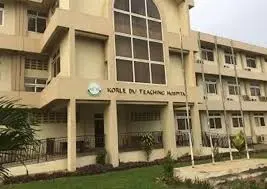
The Emergency Medicine Residents at the Korle Bu Teaching Hospital have rejected claims by hospital management disputing the state of emergency care at the facility, insisting that recent viral footage showing patients being treated on the floor reflects the true situation.
The hospital’s Chief Executive Officer, Yakubu Seidu Adam, had earlier dismissed the video, stating that it did not accurately represent conditions in the emergency wards amid concerns over the persistent “no-bed syndrome.”
However, in a press statement dated March 23, the residents maintained that the footage circulating publicly is authentic.
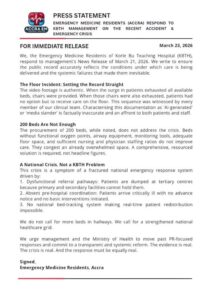
They explained that a surge in patient numbers had overwhelmed available beds and chairs, leaving some patients with no choice but to receive care on the floor.
The group described attempts to label the video as misleading or fabricated as inaccurate and disrespectful to both patients and healthcare workers.
The residents also challenged suggestions that increasing the number of beds alone would resolve the crisis, stressing that the issue goes beyond infrastructure.
According to them, effective emergency care requires functional oxygen supply points, airway management equipment, monitoring devices, adequate space, and sufficient staffing levels—factors they say are currently strained.
They warned that simply adding more beds without addressing these gaps could worsen congestion in the already overstretched emergency unit.
The doctors further indicated that the situation at Korle Bu reflects broader systemic challenges within Ghana’s healthcare system, rather than an isolated problem at a single facility.
They cited weak referral systems, lack of pre-hospital coordination, and the absence of a national bed-tracking system as key contributors to the crisis.
The residents noted that many patients are referred to tertiary facilities due to limited capacity at lower-level hospitals, while critically ill patients often arrive without prior stabilisation or notice.
They are now calling on hospital management and the Ministry of Health to move beyond public relations responses and implement comprehensive reforms.
The group emphasised that the crisis is real and requires urgent, systemic solutions to improve emergency care delivery across the country.