






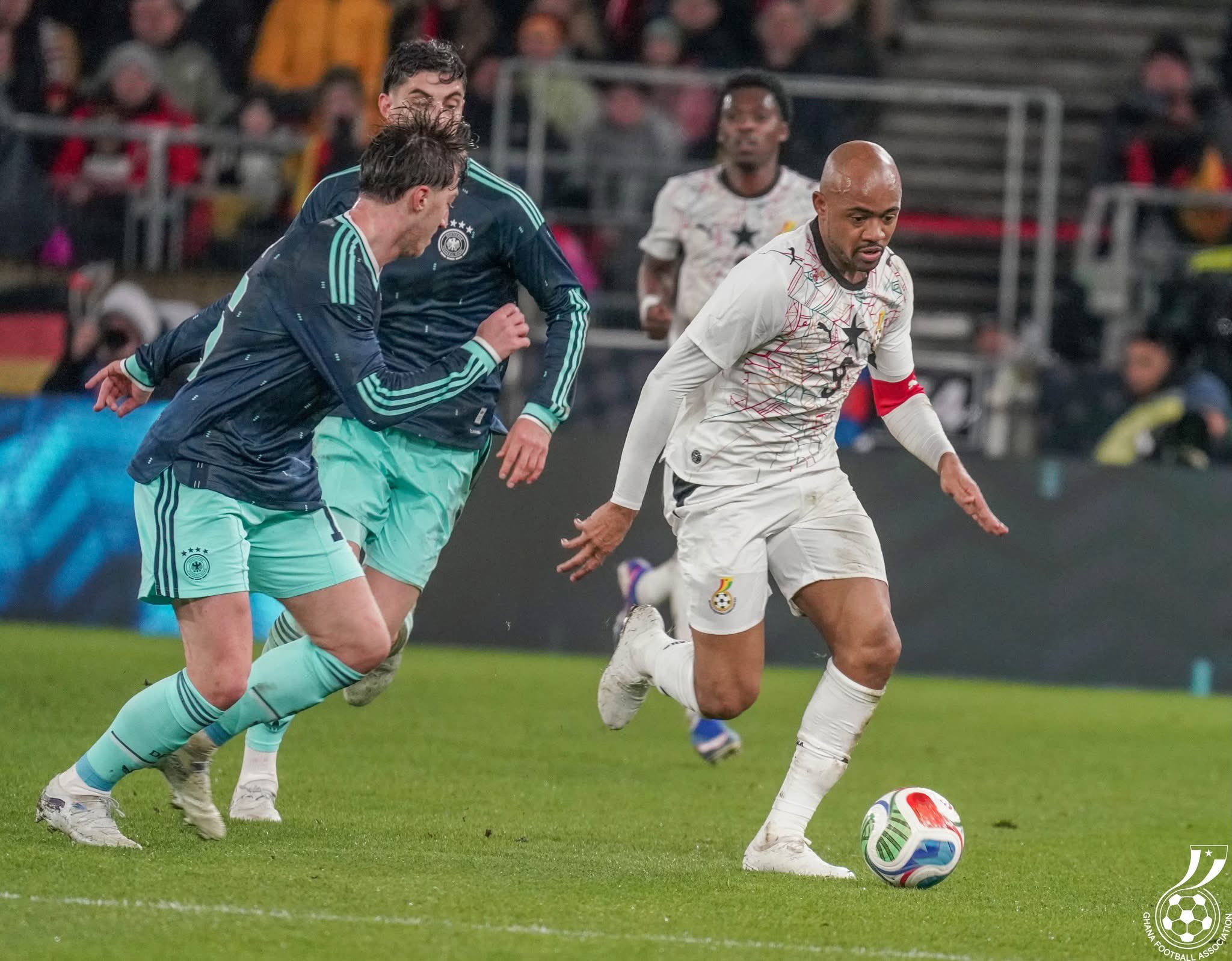
Ghana showed signs of life in Stuttgart, but the result told a harsher truth. A late goal from Germany sealed a 2-1 win and handed the Black Stars a fourth straight defeat. Progress was visible, but old wounds reopened at the worst moment.
Germany set the tone early at the MHP Arena. They controlled the ball and pinned Ghana deep with sharp movement and quick passing. Florian Wirtz struck the post inside six minutes, while Serge Gnabry and Nick Woltemade both came close as pressure built.
Ghana, set up in a compact shape, tried to stay disciplined. Otto Addo made key changes, with Benjamin Asare in goal and a back three led by Alexander Djiku. For long spells, they held firm, but the warning signs never faded.
The breakthrough came just before halftime. A VAR review punished Jonas Adjetey for handball, his second such mistake in two games. Kai Havertz stepped up and converted, giving Germany a deserved 1-0 lead.
That moment summed up Ghana’s current struggle. Small lapses continue to carry big consequences. Against top sides, there is little margin for error.
After the break, Ghana looked different. There was more energy and more intent. The introduction of Abdul Fatawu Issahaku changed the rhythm, while Elisah Owusu added balance in midfield.
The equaliser arrived in the 70th minute and it was worth the wait. Derrick Köhn surged forward and found Fatawu, who struck first time into the bottom corner. It was a clean and confident finish that lifted both team and fans.
For a brief spell, Ghana looked in control. Antoine Semenyo drove forward with purpose and the team pressed higher up the pitch. This was the response Addo had demanded after the heavy loss to Austria.
But football can be cruel. Just as Ghana seemed set to hold on, Germany struck again. Deniz Undav timed his run perfectly in the 88th minute and finished calmly past Asare to restore the lead.
It was a familiar ending. Ghana failed to manage the final moments, a problem that has now become a pattern. Ten goals conceded in four games tells its own story.
Still, there were positives. Asare made key saves under pressure, and Fatawu’s impact showed the value of fresh attacking options. The structure looked better than the chaos seen in Vienna days earlier.
Yet the bigger picture remains clear. Ghana struggle to control games against elite opposition, as shown by their low possession and limited chances. Defensive discipline and composure must improve fast.
The road ahead offers no comfort. Friendlies against Mexico and Wales await, followed by a World Cup group featuring England, Croatia, and Panama.
If Ghana are to compete on that stage, they must learn quickly. Effort alone will not be enough.