



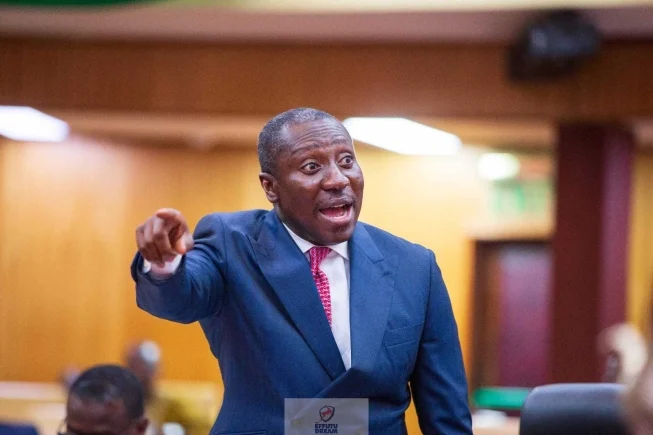
The Minority Leader in Ghana’s Parliament, Alexander Afenyo-Markin, has criticised what he describes as the sidelining of the Minority caucus in the formation of parliamentary delegations to the Pan-African Parliament and the ECOWAS Parliament.
Speaking at the 9th edition of the Crystal Ball Series, Afenyo-Markin argued that the long-standing formula used to allocate positions on such delegations has not been respected, leading to what he believes is the Minority being unfairly represented.
According to him, the Minority is entitled to two seats on the Pan-African Parliament delegation but has only been allocated one, with the alternative suggestion being that the caucus accepts an observer role.
“The Minority has two legitimate seats at the Pan-African Parliament, yet we have been given only one and asked to accept observer status instead,” he stated.
He also raised concerns about the process used in selecting members for the ECOWAS Parliament delegation. Afenyo-Markin said that although a formula had been agreed upon at the Committee on Selection, the Majority later introduced a motion to amend the arrangement without prior notice.
He described the development as unfortunate and said the Minority had been excluded from several delegations after insisting that the agreed formula be honoured.
“I hope this issue can be resolved so that the Minority receives the representation it is entitled to,” he added.
Beyond the matter of delegations, Afenyo-Markin also alleged that the Minority is facing difficulties in getting its motions debated on the floor of Parliament. He claimed that several motions submitted by Minority members, despite being formally listed, have not been considered for debate.
He cited a motion relating to the alleged dismissal of workers from state institutions as an example. According to him, the issue stemmed from a directive reportedly issued by the Chief of Staff after a change in government, instructing that certain recruitments made after the election be terminated.
Afenyo-Markin said some agencies subsequently extended the action to workers who had been employed since 2018, leading to the dismissal of individuals across several state-owned institutions.
He noted that attempts to bring the issue to parliamentary debate have faced repeated delays.
“The motion was moved and seconded, and one contributor even spoke on it. However, eight months later, the debate remains stalled despite the matter appearing on the Order Paper,” he said.
The Minority Leader questioned why progress on the motion had been halted and called for the matter to be addressed to ensure fairness and accountability within Parliament.