



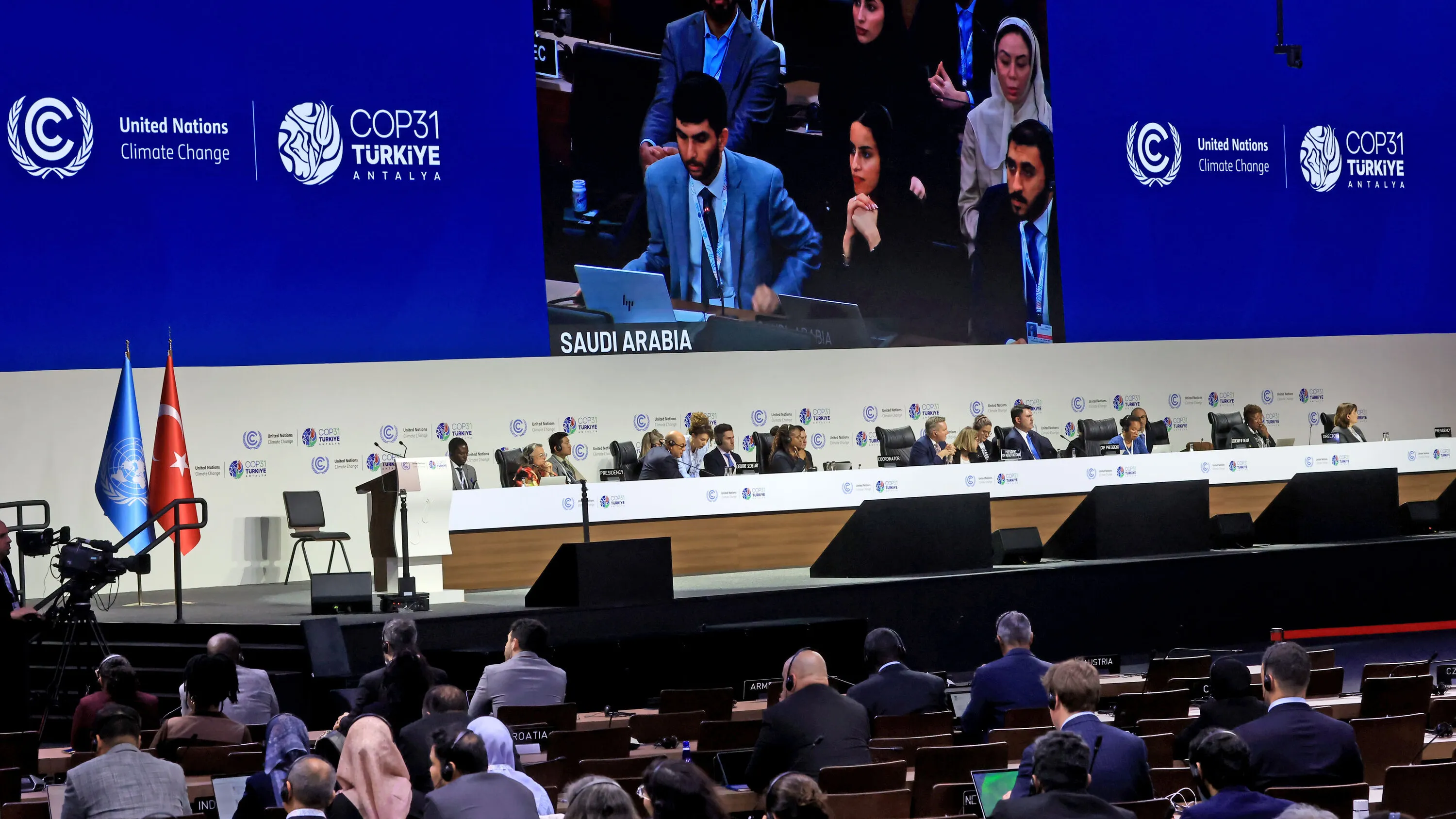
The 31st United Nations Climate Change Conference (COP31) has ended without a major overarching agreement.
This is after nearly 200 countries failed to reach consensus on critical issues, including the transition away from fossil fuels, climate financing and the scale of action needed to address global warming.
The summit, held in Antalya, Türkiye, from November 9, was expected to build on previous climate commitments and strengthen international cooperation towards limiting global warming.
However, negotiations extended beyond the scheduled November 20 closing date, eventually ending on November 22, amid deep divisions among countries.
At the centre of the disagreement was the proposed Antalya Pact, a political agreement intended to provide an overarching outcome for the conference. The draft failed to secure consensus after several countries, including members of the European Union, rejected it, arguing that it did not adequately address the urgency of the climate crisis or the need to transition away from fossil fuels.
One of the most contentious issues was the absence of an explicit commitment to move away from coal, oil and gas. More than 130 countries had pushed for a roadmap or stronger language on transitioning away from fossil fuels, but opposition from some countries prevented agreement on the proposal.
The draft also faced criticism over its proposed emphasis on carbon capture and storage technologies, with some countries and climate advocates warning that reliance on the technology could prolong fossil fuel production instead of prioritising emissions reductions at source.
Climate financing was another major point of contention, particularly demands by developing countries for clarity on funding commitments to help them adapt to climate change. Vulnerable nations called for predictable financing, clear delivery timelines and accountability, arguing that existing pledges were insufficient to meet growing adaptation needs.
Ghana, which played a role in representing African interests in the negotiations, pushed for greater clarity on adaptation financing, including a defined baseline, annual milestones and a transparent mechanism to track delivery of promised support.
Despite the failure to reach an overarching agreement, COP31 recorded progress on some issues. Countries agreed to advance work on adaptation indicators to help measure climate resilience, while the Just Transition Work Programme was extended for another three years to continue discussions on protecting workers and communities as economies move towards cleaner energy systems.
Arrangements relating to the Adaptation Fund were also agreed, while separate initiatives continued to advance on clean energy, methane reduction, forest protection and climate resilience.
The outcome has, however, raised concerns about the effectiveness of international climate negotiations at a time when scientific warnings about global warming continue to intensify.
The United Nations says the world is approaching a point where the 1.5-degree Celsius warming threshold set under the Paris Agreement is likely to be exceeded, heightening the urgency for countries to strengthen climate action.
For Ghana and other African countries, the outcome of COP31 leaves critical questions unresolved, particularly over access to climate financing, support for vulnerable communities, renewable energy investments and measures to protect livelihoods from climate-related impacts.
As countries look towards COP32 in Ethiopia, attention is expected to shift from negotiations in Antalya to how governments can rebuild consensus and deliver on commitments already made.
The failure to secure a global climate deal at COP31 underscores the widening gap between the urgency of climate change and the pace of international action, with vulnerable communities continuing to bear the consequences of delays.


