


Three prominent elder statespersons have filed a suit at the Supreme Court seeking to abolish delegate-based electoral systems used by Ghana’s major political parties, arguing that the practice is unconstitutional and disenfranchises ordinary party members.
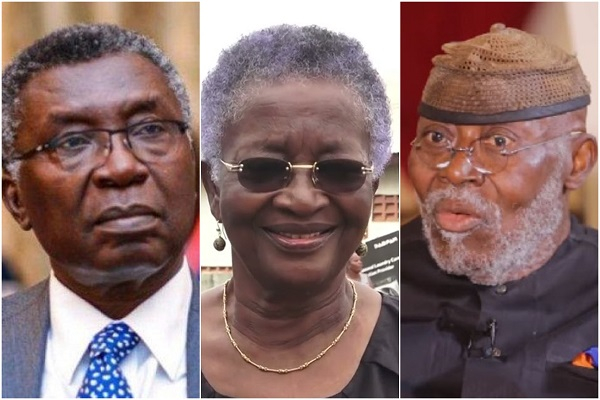
The action, filed on January 23, 2026, was brought by renowned cardiothoracic surgeon Prof. Kwabena Frimpong-Boateng, veteran politician Dr. Nyaho Nyaho-Tamakloe, and former Minister of State Dr. Christine Amoako-Nuamah.
The plaintiffs contend that the New Patriotic Party (NPP), National Democratic Congress (NDC), and Convention People’s Party (CPP) have replaced broad-based internal democracy with what they describe as an “oligarchic” system that limits voting rights to a small group of executives and delegates.
According to the suit, the delegate system “severely disenfranchises” hundreds of thousands of party members in good standing and violates several provisions of the 1992 Constitution, including those guaranteeing equality, political participation, and democratic governance.
Led by lawyer Oliver Barker-Vormawor, the legal team is asking the court to declare that the internal organisation of political parties must reflect the democratic principles of the Constitution, including equal and direct voting rights for all members.
The suit specifically challenges provisions in the constitutions of the NPP, NDC, and CPP that entrench delegate-based systems for selecting presidential and parliamentary candidates.
The Electoral Commission (EC) has been joined as the fourth defendant, with the plaintiffs accusing it of failing to enforce the Political Parties Act, which requires party constitutions to conform to democratic principles before registration.
Among the reliefs being sought are a declaration striking down delegate-based systems, an order compelling political parties to revise their constitutions to allow universal member suffrage, and a directive requiring the EC to strictly vet party structures for democratic compliance.
The plaintiffs argue that the case is particularly urgent as Ghana approaches another election cycle, warning that allowing a narrow elite to control candidate selection undermines accountability and weakens the democratic link between citizens and the state.