






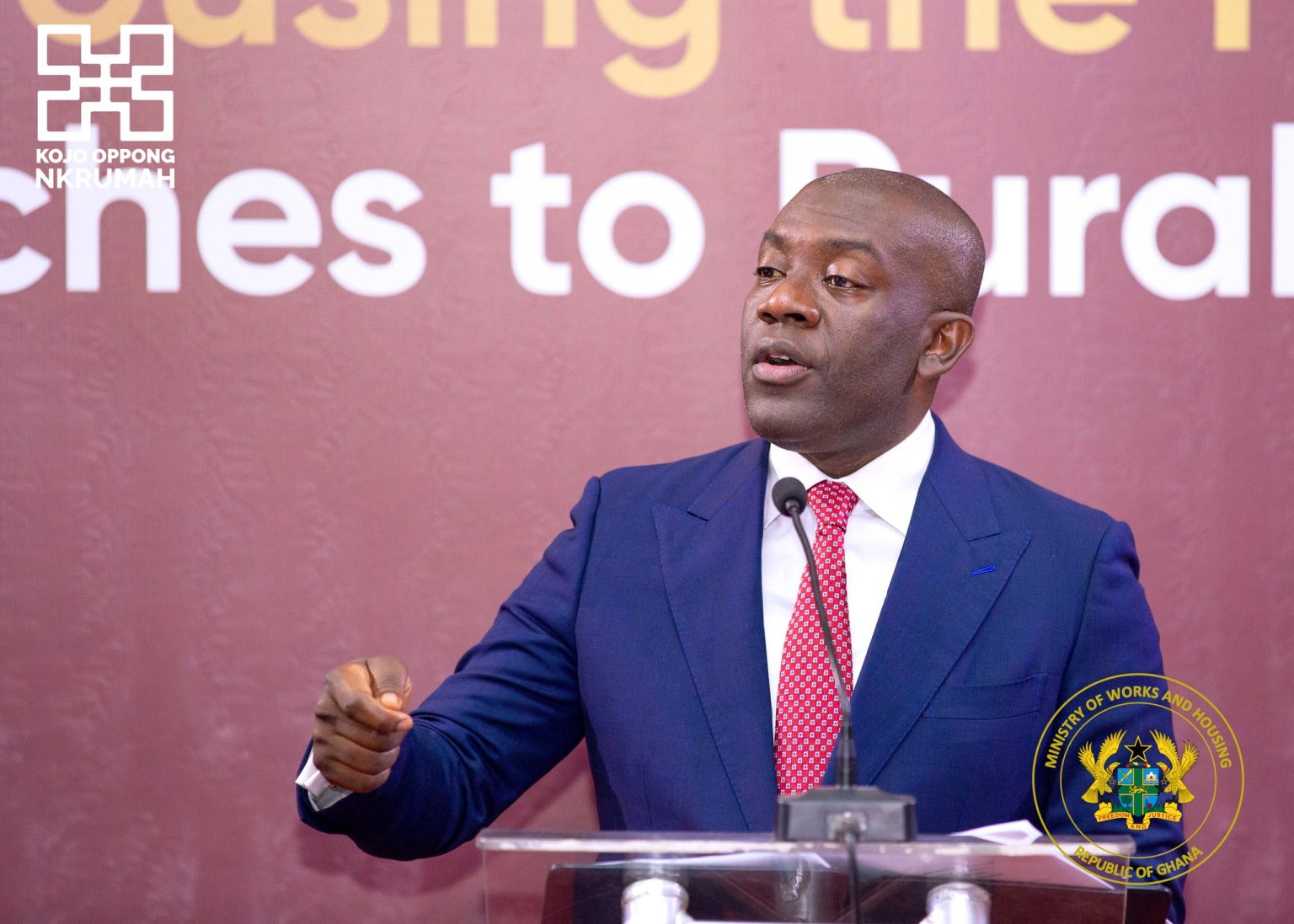
Former Information Minister and Member of Parliament for Ofoase-Ayirebi, Kojo Oppong Nkrumah, has strongly criticized Parliament’s Majority side for rejecting a proposed inquiry into the Gold-for-Reserves programme, describing the decision as a setback for accountability and legislative oversight.
Oppong Nkrumah, who also serves as Ranking Member on Parliament’s Economy and Development Committee, sponsored the motion seeking a comprehensive investigation into the policy implemented by the Bank of Ghana since 2021.
The motion, debated on Friday, March 27, 2026, called for an inquiry into the programme’s design, operations, financial performance, and cost structure. However, it was defeated by the Majority through a voice vote, effectively halting any formal parliamentary probe.
Reacting to the outcome, Oppong Nkrumah described the decision as “bizarre,” arguing that it denied Parliament and the public an opportunity to fully understand the programme, which has been a key component of Ghana’s economic strategy.
The Gold-for-Reserves initiative was introduced to strengthen foreign exchange reserves, stabilize the cedi, and reduce reliance on external currencies by leveraging Ghana’s gold resources. It marked a significant shift from traditional dependence on commodity exports such as cocoa.
Oppong Nkrumah maintained that the programme has become a major contributor to foreign exchange accumulation, making parliamentary scrutiny essential. He questioned why lawmakers would refuse to examine a policy they have consistently approved as part of the national economic framework.
At the center of the controversy are claims that the programme recorded a $214 million loss in 2025, a figure widely referenced in political and economic discussions. The proposed inquiry was expected to assess these claims alongside the broader financial and operational performance of the initiative.
The MP also raised concerns about the programme’s cost structure, alleging that about 15 per cent of funds released in 2025 were lost to handling and transaction-related charges. He argued that such figures warrant a detailed investigation to determine their justification and identify corrective measures.
Additionally, he questioned the management of gold reserves under the programme, claiming that approximately half of the acquired gold was sold in the final quarter of 2025, even as calls for an inquiry were being made. He described the move as inconsistent, particularly given plans to repurchase gold at potentially higher prices.
Oppong Nkrumah further highlighted concerns about the sourcing of gold, pointing to the prevalence of illegal small-scale mining, known locally as galamsey. He warned that the programme could be indirectly relying on gold from illicit operations, stressing the need for parliamentary scrutiny.
He accused the Majority side of prioritizing partisan interests over national accountability, stating that a bipartisan investigation would have helped establish the facts surrounding the programme.
Despite the rejection of the motion, Oppong Nkrumah indicated that the Minority would continue to pursue accountability through alternative means. He added that the issue could be revisited in the future, noting that there is no time limit on such matters.
The decision leaves several critical questions about the Gold-for-Reserves programme unresolved, including its financial performance, cost efficiency, and long-term sustainability.