





In a significant shift that has sparked both relief and debate, the Jehovah’s Witnesses organization has announced a modification to its decades-old prohibition on blood transfusions. The religious group, known globally for its strict adherence to biblical interpretations regarding medical treatments, will now allow its members to make personal decisions regarding the use of their own stored blood during medical procedures.
The announcement, delivered by Gerrit Lösch, a senior member of the Governing Body, marks a notable departure from a doctrine that has defined the faith since 1945. However, the core ban on receiving blood from other donors remains firmly in place, leaving many medical professionals and former members questioning if the change goes far enough.
The Policy Clarification
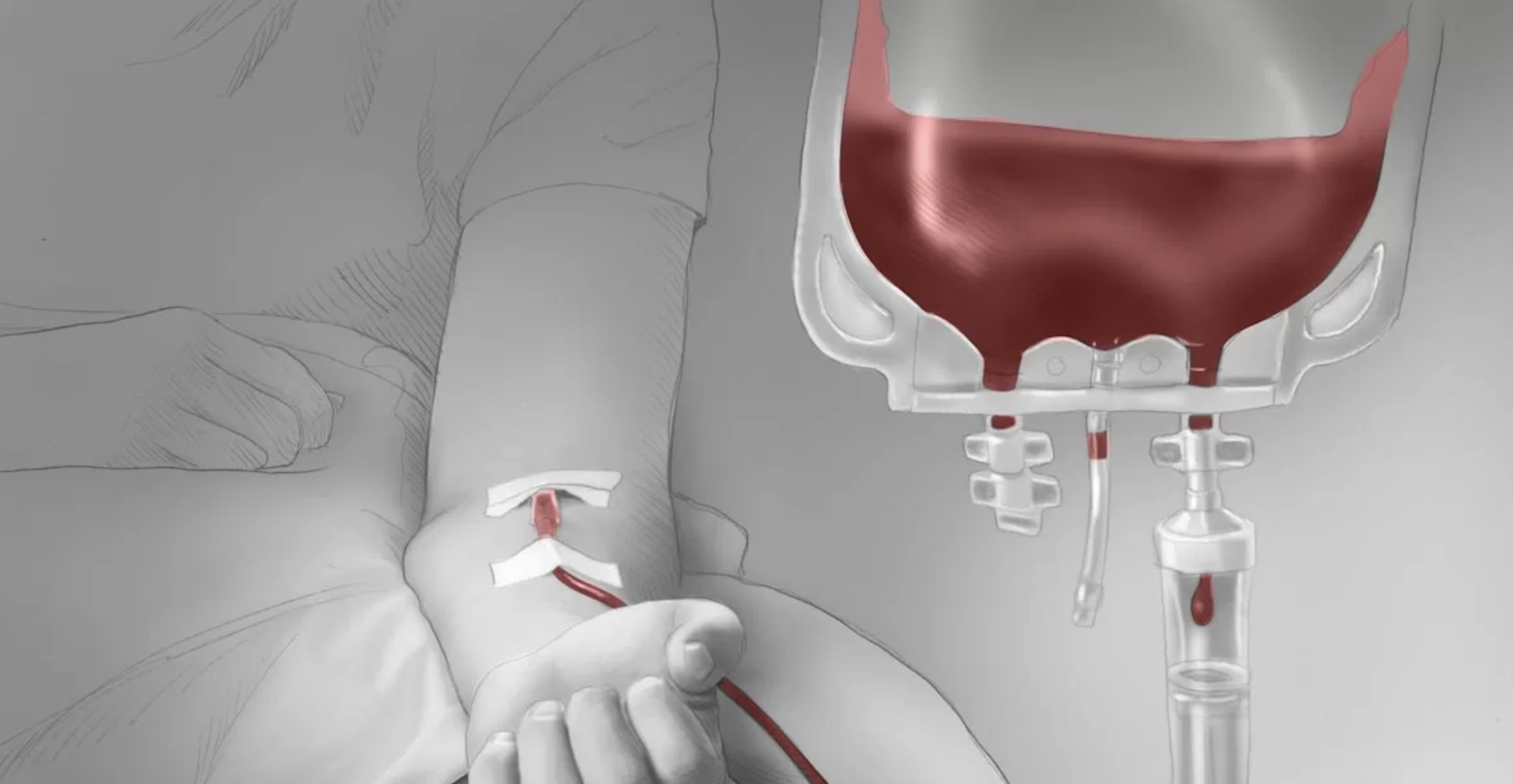
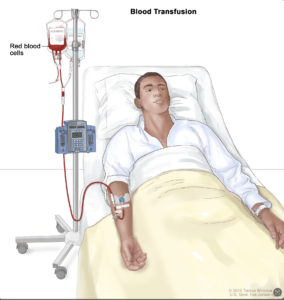
The Governing Body characterized the update as a “clarification” rather than a complete reversal of doctrine. According to the new guidelines, members can now choose to have their own blood removed, stored, and later returned to them during medical procedures—a process known medically as autologous blood transfusion.
“Each Christian must decide for himself how his own blood will be used in all medical and surgical care,” Lösch stated in a video published on the organization’s official website. “This includes whether to allow his own blood to be removed, stored, and then given back to him. What does this mean? Some Christians may decide that they would allow their blood to be stored and then be given back to them. Others may object.”
The organization maintains that this decision is based on the premise that “the Bible does not comment on the use of a person’s own blood in medical and surgical care.”
Previously, the church permitted medical procedures that temporarily removed blood but quickly returned it to the body, such as kidney dialysis, cell salvage devices, and the use of heart-lung machines. The new policy extends this to include the preoperative collection and storage of a patient’s own blood for later use.
What Remains Unchanged
Despite the relaxation regarding autologous transfusions, the Jehovah’s Witnesses organization remains steadfast in its prohibition against receiving allogeneic blood—transfusions from other donors. This includes whole blood and its four primary components: red cells, white cells, platelets, and plasma.
The historical teaching stems from biblical passages, notably Genesis 9:4, Leviticus 17:10, and Acts 15:28-29, which command believers to “abstain from blood.” The organization interprets these verses as applying not merely to dietary laws but as a universal principle encompassing medical transfusions.
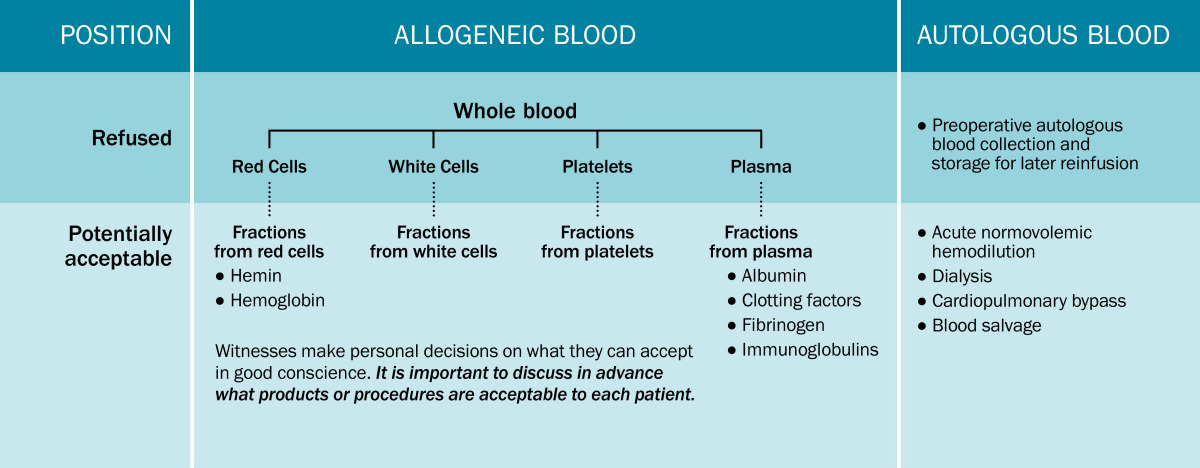
A chart illustrating the Jehovah’s Witnesses’ position on various blood components and procedures.
|
Blood Component/Procedure
|
Previous Stance
|
New Stance (March 2026)
|
|
Donor Blood (Allogeneic)
|
Prohibited
|
Prohibited
|
|
Primary Components (Red/White cells, Platelets, Plasma)
|
Prohibited
|
Prohibited
|
|
Blood Fractions (Albumin, Immunoglobulins)
|
Personal Choice
|
Personal Choice
|
|
Continuous Circulation (Dialysis, Heart-Lung Machine)
|
Personal Choice
|
Personal Choice
|
|
Stored Own Blood (Autologous)
|
Prohibited
|
Personal Choice
|
Medical Implications and Limitations
While the policy shift offers a new option for planned surgeries where significant blood loss is anticipated, medical experts note its limitations in emergency situations.
Autologous blood donation typically requires blood to be drawn between six weeks and five days before a scheduled surgery. This makes the procedure entirely unviable for trauma victims, accident survivors, or patients experiencing sudden, severe hemorrhaging. Furthermore, donating one’s own blood prior to surgery can lead to anemia or a lower blood count, which carries its own risks.
The change also offers little relief for patients requiring multiple transfusions over an extended period, such as children undergoing certain cancer treatments. Additionally, in many developing nations, the infrastructure required to safely collect, store, and reinfuse a patient’s own blood is simply not available.
Reactions and Criticisms
The announcement, which leaked on social media forums before the official release, has drawn mixed reactions. While some view it as a positive step toward greater medical autonomy, critics—particularly former members—argue it is woefully inadequate.
Mitch Melin, a former member who advocates for awareness regarding the organization’s policies, expressed his reservations to the Associated Press. “I don’t think it goes far enough, but it’s a significant change,” he said. “If one of Jehovah’s Witnesses faces a medical emergency with significant blood loss, or if a child requires multiple transfusions to treat certain types of cancers, this policy change does not grant them complete freedom of conscience to accept potentially life-saving interventions involving donated blood.”
The human cost of the blood transfusion ban has been a subject of intense scrutiny. Medical researchers have estimated that hundreds of Jehovah’s Witnesses die annually worldwide due to the refusal of blood transfusions.
A poignant recent example occurred in Nigeria in late 2025, when a church member known as AuntieEsther declined a blood transfusion recommended for her cancer treatment. Despite a public fundraising campaign that raised over ₦30 million for her care, she opted for a more expensive, prolonged alternative that avoided transfusion, reportedly after being warned of possible disciplinary measures by the church. She tragically passed away shortly after.
The Threat of Disfellowshipping
The enforcement of the blood doctrine remains a contentious issue. Members who voluntarily accept a prohibited blood transfusion and are not deemed repentant are considered to have disassociated themselves from the faith. This results in “disfellowshipping,” a practice where the individual is systematically shunned by all other members of the organization, including family and friends.
Critics argue that this threat of social and familial isolation exerts undue pressure on members facing life-or-death medical decisions, effectively removing true freedom of choice.
As the medical community and the 9.2 million Jehovah’s Witnesses worldwide digest this new directive, the debate over religious freedom, medical ethics, and the sanctity of life continues. While the allowance for autologous transfusions represents a historic shift, the enduring ban on donor blood ensures that the intersection of faith and medicine will remain a complex and often tragic battleground.
This story was compiled with information from the Associated Press, Premium Times Nigeria, and official Jehovah’s Witnesses publications.