



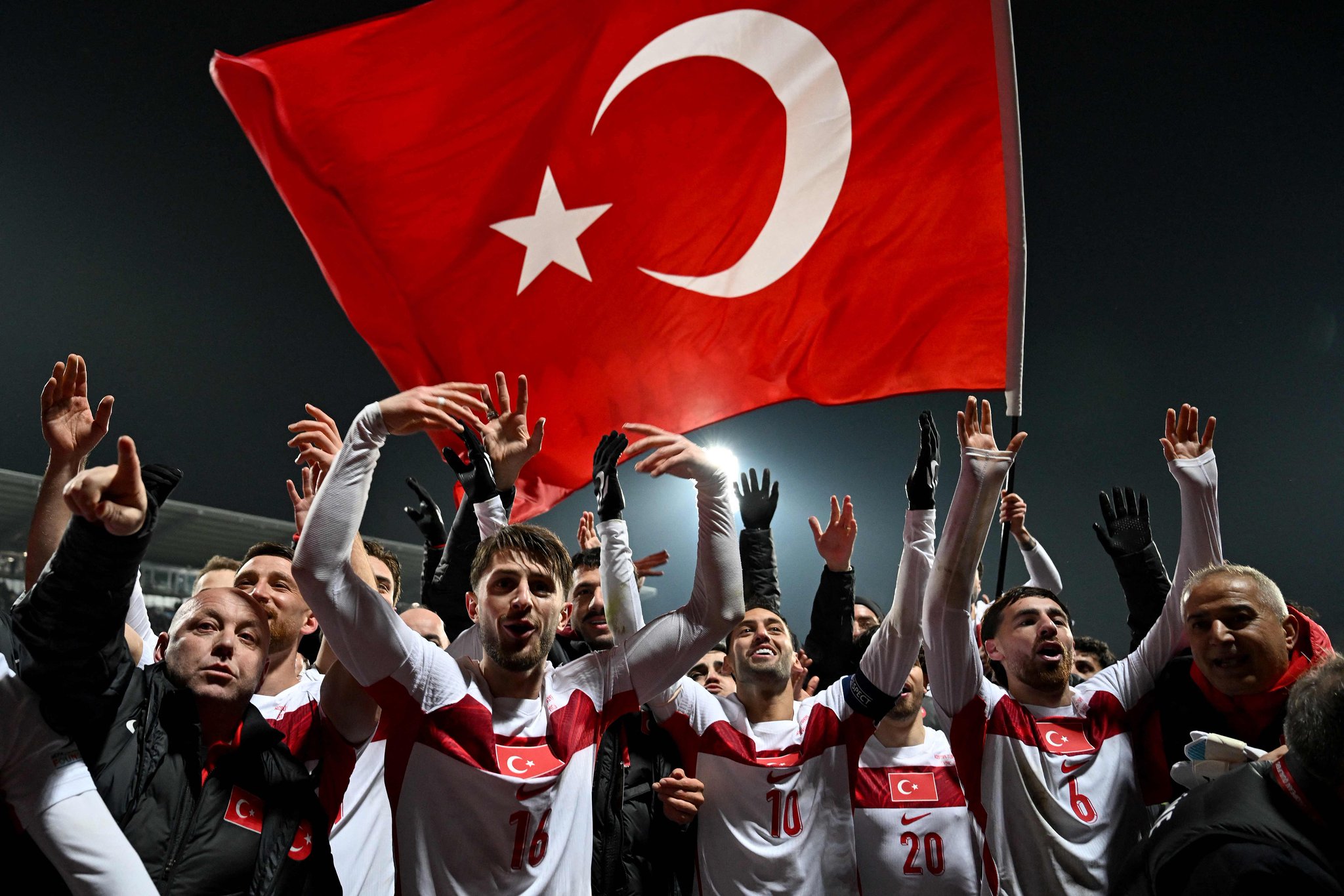
The road to the World Cup often reveals football at its rawest. In one breath, nations celebrate history. In the next, giants fall to pieces. Across Europe and beyond, the latest play-off battles delivered joy, chaos, and pain in equal measure.
In Pristina, Turkey wrote a long-awaited chapter. A narrow 1-0 win over Kosovo sealed their first World Cup appearance since 2002. Kerem Akturkoglu’s scrappy finish early in the second half proved enough in a tense and cagey contest.
Turkey’s journey has been years in the making. After five failed qualification campaigns, this felt like release. Led by talents like Arda Guler and Hakan Calhanoglu, they now return to the global stage with belief and momentum.
The game itself was far from fluent. Kosovo struck the bar through Fisnik Asllani, forcing Ugurcan Cakir into a key save. Turkey, clinical in their one clear moment, showed the discipline that has defined their resurgence.
Kosovo’s heartbreak runs deep. Less than a decade after their first official match, they came within touching distance of history. Their growth is clear, but this was a cruel end to a brave campaign.

If Turkey’s night was about control, Sweden’s was pure chaos. In Stockholm, a frantic finale saw Viktor Gyokeres smash home a late winner to send his side to the World Cup. The stadium erupted as years of frustration gave way to relief.
Sweden’s path has been anything but smooth. They failed to win a single game in their qualifying group, leading to a managerial change. The arrival of Graham Potter brought calm, structure, and belief when it mattered most.
“We weren’t perfect, but who cares?” Potter said. “We’re going to the World Cup, baby. Wow. Yeah, I can’t analyse it.” His words captured the emotion of a night where results mattered more than style.
Tactically, Sweden have shifted. A back five has brought stability, while their attacking stars have delivered in key moments. Gyokeres has led the charge, stepping up when the team needed a hero.

But while some nations celebrated, Italy sank further into crisis. A penalty shootout defeat to Bosnia-Herzegovina confirmed their absence from a third straight World Cup. For a four-time champion, it is a staggering fall.
Gennaro Gattuso’s side fought hard with 10 men after Alessandro Bastoni’s red card. Gianluigi Donnarumma made crucial saves, but Haris Tabakovic’s equaliser forced extra time. From there, the shootout told a familiar story of Italian pain.
“It hurts,” Gattuso admitted. “A blow that’s difficult to digest.” His words echoed across a nation struggling to understand its decline.
Leonardo Spinazzola added: “Italian children will see another World Cup without Italy.” That reality now feels impossible to ignore.

Elsewhere, the Czech Republic held their nerve. A dramatic penalty shootout win over Denmark secured their first World Cup in 20 years. It was a night built on resilience, structure, and composure under pressure.
For Denmark, the miss of Rasmus Hojlund summed up a painful exit. For the Czechs, it marked a return to football’s grandest stage.