


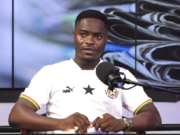

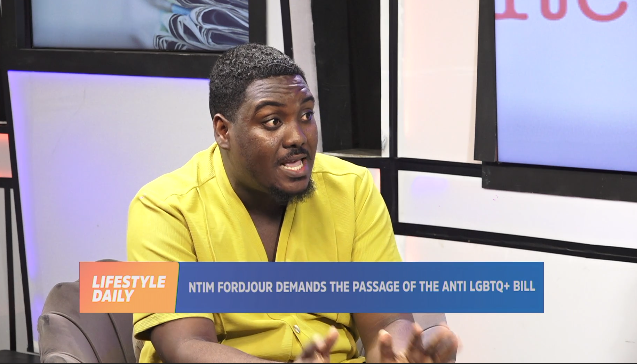
A member of the New Patriotic Party (NPP) Communications Team, Jesse Jakes, has called on President John Dramani Mahama to expedite the passage of the Anti-LGBTQ+ Bill to allow the bill to be assented before the end of the year.
Speaking on MX24’s News Review segment on the AM Club, Mr. Jakes called for swift legislative action on the bill, stressing that Parliament must complete its processes without delay so the President can sign it into law once it is transmitted for assent.
“The President must make sure that he expedites processes in Parliament for the bill to be passed. The NPP is very patient with the President” he said.
He cautioned that any delay or failure by the President to assent to the bill—once passed—could trigger a nude demonstration as a form of protest.
“We are waiting for this bill to be presented, read and passed by Parliament and then sent to the President for assent… Should the President fail to assent to the bill, we will embark on a naked demonstration” he said.
“It is an underground conversation” he added when asked about the leaders of this protest.
His comments come amid renewed parliamentary interest in the Human Sexual Rights and Family Values Bill, commonly referred to as the Anti-LGBTQ+ Bill.
The bill has been at the centre of national controversy since it first gained traction in Parliament in 2021, moving through multiple stages of readings and committee considerations before being passed in its previous form in February 2024.
However, the bill did not become law after it failed to receive presidential assent before the dissolution of Parliament after the 2024 general elections. It has since been reintroduced in a revised form by a group of lawmakers, triggering fresh debates over its constitutional, social, and economic implications.
Under the current political climate, discussions around the bill have resurfaced, with proponents arguing that it reflects Ghanaian cultural and religious values, while critics warn of human rights concerns and potential economic consequences.
Recent public commentary from political actors has further intensified the debate, with some Members of Parliament and public figures insisting the bill remains a legislative priority, while others urge caution and broader national consultation before final passage.
Government communication officials have also indicated that while the issue remains politically sensitive, attention is being balanced with other national socio-economic priorities.


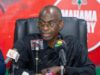
 Communications Team, Jesse Jakes, has called on President John Dramani Mahama to expedite the passage of the Anti-LGBTQ+ Bill to allow the bill to be assented before the end of the year.)