



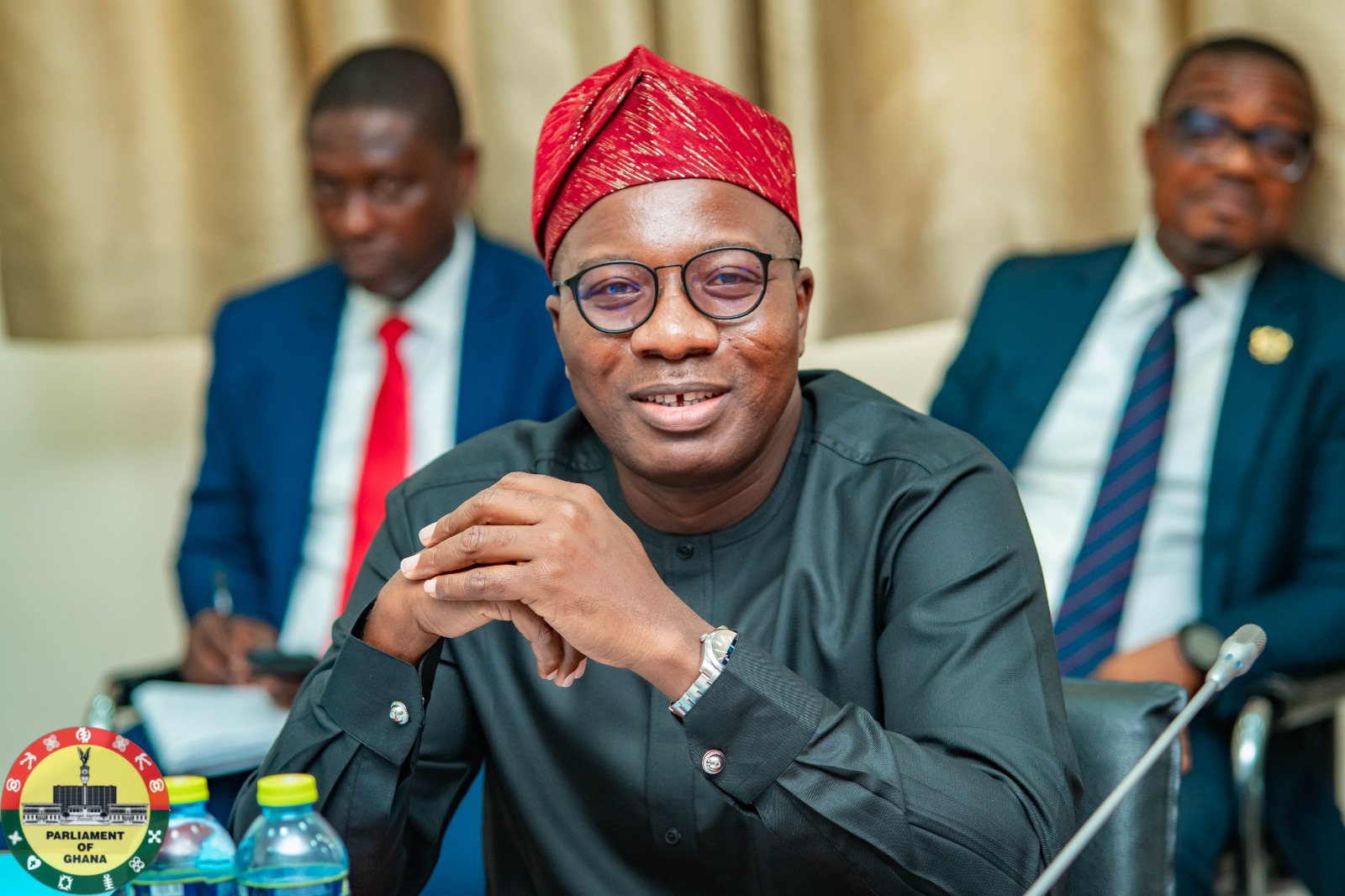
The National Democratic Congress (NDC) Majority Caucus in Parliament has urged Ghanaians to disregard comments by the New Patriotic Party (NPP) Minority Caucus, led by Alexander Afenyo-Markin, describing the group as “failed” and lacking credibility on economic matters.
The response follows a press conference by the Minority Caucus in which it rejected claims that recent improvements in Ghana’s economy are the result of competent governance under President John Mahama. The Minority argued that external factors, rather than sound economic management, account for the current economic recovery. It also accused the government of contributing to a resurgence in illegal mining, known as galamsey, citing the establishment of the Ghana Gold Board (GoldBod) as one of the causes.
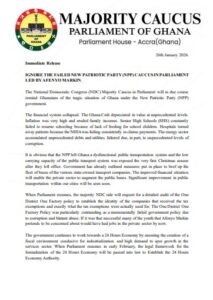
In a statement issued on January 26, 2026, and signed by Majority Leader and Leader of Government Business, Mahama Ayariga, the Majority Caucus said it would soon remind the public of what it described as the “dire state” in which the NPP left the country.
According to the statement, the previous administration presided over the collapse of the financial system, severe depreciation of the cedi, high inflation, and major failures in social services. Ayariga said the NPP era was marked by repeated delays in the reopening of Senior High Schools due to lack of feeding, hospitals turning away patients over unpaid National Health Insurance Scheme (NHIS) claims, and an energy sector burdened by huge debts and corruption.
The Majority Leader also criticised the NPP for what he described as a weak public transport system, noting that its limited carrying capacity was exposed during the first Christmas season after the party left office.
He said the current government has begun strengthening state-owned transport fleets and expects support from the private sector, with noticeable improvements anticipated in the near future.
Ayariga further announced that the Majority Caucus would push for a comprehensive audit of the One District One Factory (1D1F) policy when Parliament resumes. He described the initiative as a failed programme plagued by corruption and abuse and questioned its impact on youth employment.
On future plans, the statement said the government is moving to formalise a 24-hour economy. Ayariga noted that the legal framework to establish a 24 Hours Economy Authority would be passed when Parliament reconvenes in early February.
The Majority Caucus also accused the NPP of collapsing key social intervention programmes by the end of 2024, including the NHIS and the Free Senior High School policy, attributing the situation to financial mismanagement and corruption that weakened district assemblies and decentralised governance.
Defending the government’s economic performance, the Caucus said Ghana’s recovery has been acknowledged by the International Monetary Fund (IMF), the World Bank, and international credit rating agencies. Ayariga cited improvements in the exchange rate, declining inflation, and stronger foreign reserves as evidence of the turnaround.
The statement also defended the Ghana Gold Board, describing it as an effective tool for stabilising the cedi, and said the government’s foreign policy and economic diplomacy have contributed to the rapid recovery.
On the fight against illegal mining, the NDC said the government has intensified enforcement operations, leading to a significant reduction in environmental destruction, while investments are being made toward land and water restoration efforts.




 Majority Caucus in Parliament has urged Ghanaians to disregard comments by the New Patriotic Party (NPP) Minority Caucus, led by Alexander Afenyo-Markin, describing the group as “failed” and lacking credibility on economic matters.)